Wellness
Your Brain on Mindfulness: The Science Is More Compelling Than the Marketing
Researchers have mapped what meditation actually does to grey matter — and cariocas are catching on faster than almost anywhere in Brazil.
4 min read
Wellness
Researchers have mapped what meditation actually does to grey matter — and cariocas are catching on faster than almost anywhere in Brazil.
4 min read
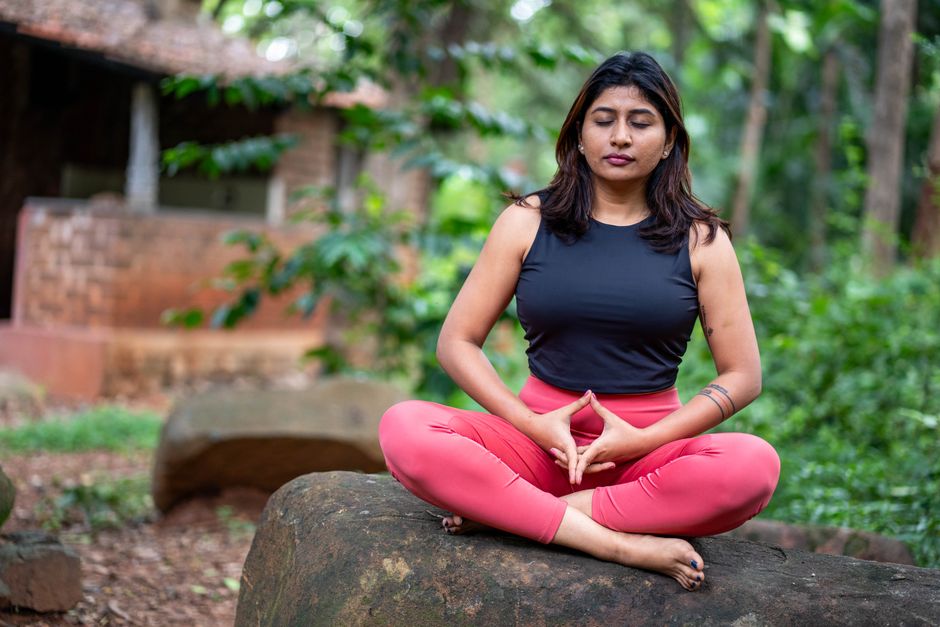
Eight weeks. That is how long it takes for a consistent mindfulness practice to produce measurable structural changes in the human brain, according to research published by Harvard Medical School that has become something of a benchmark in neuroscience circles. The prefrontal cortex thickens. The amygdala — the region most associated with the stress response — shrinks in grey matter density. These are not self-reported feelings of calm. They are visible on an MRI scan.
That finding matters right now because Brazilians are under strain. The Instituto Ipsos placed Brazil fifth globally in its 2025 Stress Index, with 68 percent of respondents reporting chronic stress symptoms. In Rio de Janeiro specifically, the combination of economic pressure, urban noise, and the particular social intensity of a city of 6.7 million people has pushed mental health services to capacity. The waiting list at the Centro de Atenção Psicossocial in Botafogo stretched to 11 weeks as of March 2026. Psychiatrists and psychologists are actively pointing patients toward evidence-based complementary practices while they wait — and mindfulness sits near the top of that list.
The mechanism is worth understanding, not just accepting on faith. When you meditate — specifically when you practice focused-attention or open-monitoring techniques for 20 to 45 minutes daily — you repeatedly exercise a neural circuit that runs between the prefrontal cortex and the default mode network. The default mode network is the system that fires when your mind wanders: the loop of rumination, regret, and anticipatory anxiety. Training attention strengthens the prefrontal cortex's ability to interrupt that loop. Over months, the interruption becomes faster and less effortful.
A 2024 meta-analysis published in Neuroscience & Biobehavioral Reviews reviewed 78 studies covering more than 5,600 participants and found that mindfulness-based interventions produced a statistically significant reduction in cortisol levels — the primary stress hormone — with the strongest effects appearing after a minimum of six weeks of practice. The same analysis found improvements in working memory and sustained attention that persisted at three-month follow-up assessments. This is relevant for anyone sitting in Zona Norte traffic on the Linha Amarela at 7 a.m., whose cortisol is already elevated before the workday begins.
Sleep architecture changes too. Melatonin regulation — currently the subject of significant international discussion among endocrinologists — is partly downstream of cortisol. Lower chronic cortisol levels correlate with more regular melatonin secretion, which in practice means faster sleep onset and longer slow-wave sleep phases. For Rio residents, whose city rarely goes fully quiet before midnight, that is not a trivial benefit.
The practice has moved well beyond yoga studios in Ipanema, though those still exist — Centro Íman on Rua Barão da Torre charges R$65 per drop-in session and runs a dedicated eight-week Mindfulness-Based Stress Reduction program modelled on the protocol originally developed by Jon Kabat-Zinn at the University of Massachusetts in 1979. The MBSR format is the most rigorously studied version of mindfulness training in the scientific literature.
More accessible is the free programming run by the Espaço Bem Estar inside Parque Lage in Jardim Botânico, which offers guided meditation sessions on Saturday mornings at 8 a.m. under the shade of the park's Atlantic Forest canopy. Attendance has grown from roughly 30 participants per session in early 2024 to more than 90 by June 2026, according to the park's own attendance records. The Associação Brasileira de Mindfulness, headquartered in São Paulo but with an active Rio chapter, runs a teacher certification program that has trained 240 instructors across the city since 2022.
Apps fill the gap for people who cannot commit to a fixed schedule. Lojong, a Brazilian-developed mindfulness app with content in Portuguese, reported 1.2 million active users nationally as of January 2026 — a 34 percent increase over the previous year. A monthly subscription runs R$29.90.
The practical starting point for anyone curious is simpler than the market suggests: 10 minutes of focused breathing daily, sustained for eight weeks, with attention returned — without self-criticism — each time it drifts. That is the core protocol. Everything else is refinement. Anyone with specific concerns about anxiety, sleep disorders, or hormonal stress responses should speak with a clinician at their nearest Unidade de Saúde da Família before beginning any structured program.

Wellness

Wellness

Wellness

Wellness
About this article
Published by The Daily Rio de Janeiro
Spread the word
Daily brief
Free, in your inbox before 7am. Weekdays.
The Daily Network — local news across Australia